
Air Quality Dust Risk Assessments (AQDRA)
Assessing construction dust risks and identifying mitigation measures.
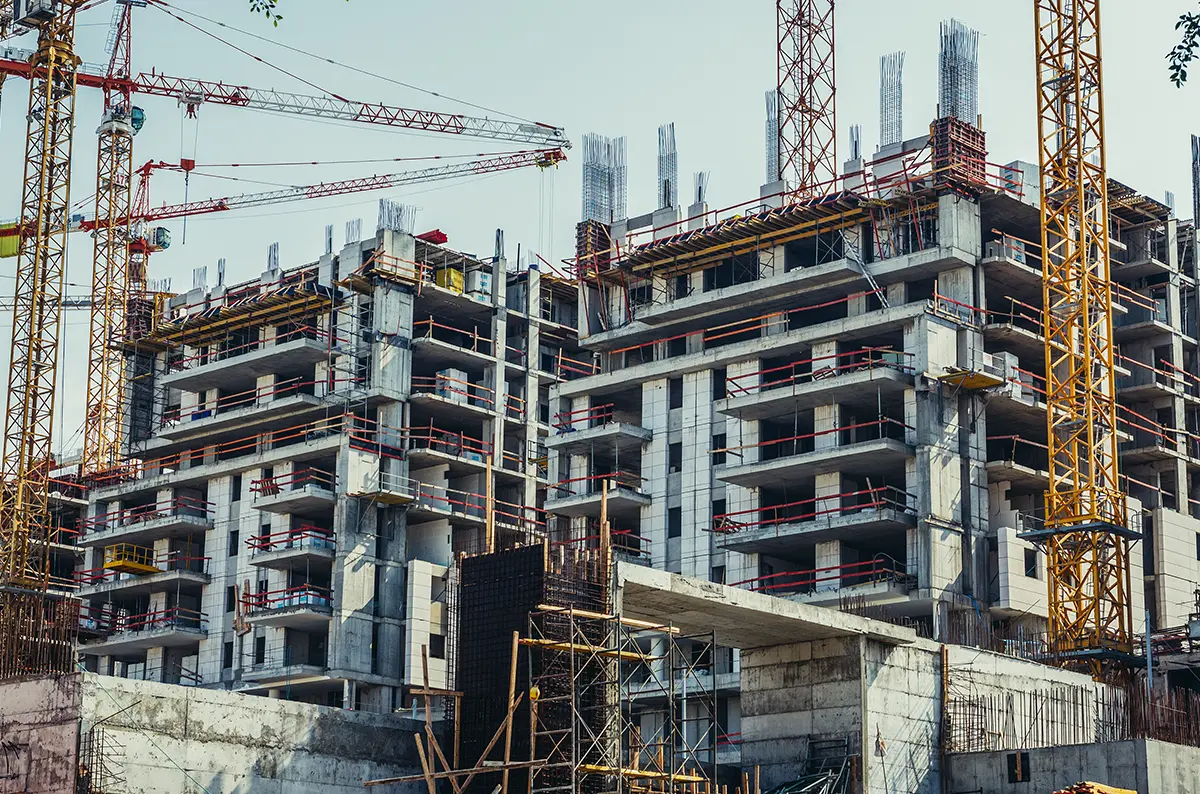
An AQDRA is generally required where:
- Construction or demolition activities are proposed
- The site is located near sensitive receptors
- There is potential for dust soiling or human health impacts
- The local planning authority requests an assessment
What is an Air Quality Dust Risk Assessment?
An air quality dust risk assessment (AQDRA) is a study used to evaluate the potential for dust and particulate matter emissions during the construction and demolition phases of a development.
These assessments are typically required where construction activities have the potential to generate dust that could affect nearby sensitive receptors, such as residential properties, schools, or hospitals.
Air quality dust risk assessment are undertaken in accordance with guidance from the Institute of Air Quality Management (IAQM) or the Control of Dust and Emissions during Construction and Demolition SPG in London, which sets out a structured approach to assessing and managing dust risks.
It is commonly submitted alongside planning applications for residential, commercial, and infrastructure developments.
What does an Air Quality Dust Risk Assessment include?
An air quality dust risk assessment follows a qualitative risk-based approach and typically includes:
- Identification of dust emission sources (e.g. demolition, earthworks, construction, track out)
- Assessment of sensitivity of surrounding areas
- Evaluation of baseline conditions
- Risk classification (e.g. negligible, low, medium, high) based on IAQM criteria
- A package of site-specific mitigation measures
What is the purpose?
The purpose of an air quality dust risk assessment is to identify and manage the risk of dust impacts during construction. It ensures that appropriate mitigation measures are implemented to:
- Prevent nuisance dust effects
- Protect human health
- Minimise impacts on the surrounding environment
With appropriate mitigation in place, most developments can reduce dust risk to an acceptable level and comply with planning requirements.


